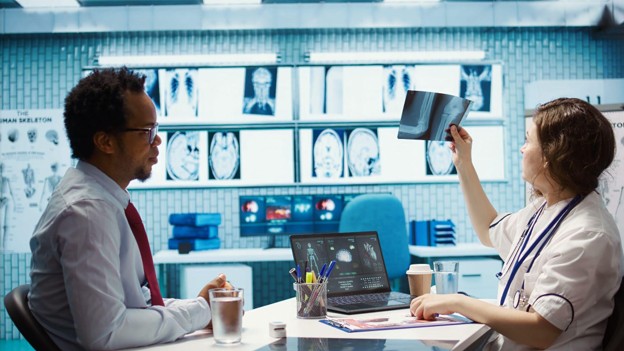
For patients living with persistent pain, Basem Hamid, MD, of Houston, TX, explains that image-guided procedures have helped make interventional pain medicine more precise, targeted, and patient-specific. Rather than relying only on broad symptom descriptions, modern pain specialists can use imaging technology to better understand where pain may be coming from and guide treatment with greater accuracy.
Pain can be complex. It may originate from nerves, joints, discs, muscles, inflammation, or multiple overlapping sources. Because of this complexity, identifying the correct pain generator is often one of the most important steps in developing an effective treatment plan. Image-guided procedures support that process by helping physicians deliver care to specific anatomical areas with greater confidence.
What Image-Guided Procedures Mean
Image-guided procedures use medical imaging during diagnosis or treatment to help physicians visualize the area being addressed.
Common forms of guidance may include:
- Fluoroscopy
- Ultrasound
- CT guidance
- X-ray-based imaging
- Real-time procedural visualization
These tools help physicians confirm positioning and improve accuracy during minimally invasive pain procedures.
Why Precision Matters in Pain Medicine
Pain symptoms do not always point clearly to the underlying source. For example, pain that travels into the leg may involve the lower back, nerve irritation, joint dysfunction, or other contributing factors.
Precision matters because targeted treatment may help physicians:
- Identify likely pain sources
- Reduce unnecessary trial-and-error approaches
- Improve procedural accuracy
- Focus treatment on specific structures
- Better evaluate patient response
When pain care becomes more precise, treatment planning can become more informed.
Moving Beyond Symptom-Based Treatment
Traditional pain care often begins with patient symptoms, physical examination, and medical history. These remain essential, but they may not always provide the full picture.
Image guidance adds another layer of information by helping physicians evaluate anatomy and guide treatment more directly.
This approach may be especially useful when patients experience:
- Radiating nerve pain
- Spine-related discomfort
- Joint-related pain
- Persistent pain after injury
- Pain that has not improved with conservative care
The goal is not simply to reduce discomfort temporarily but to better understand the source of the problem.
Common Uses in Interventional Pain Medicine
Image-guided techniques may be used in several types of pain procedures depending on the patient’s condition and clinical evaluation.
Examples may include:
- Epidural steroid injections
- Facet joint injections
- Nerve blocks
- Sacroiliac joint injections
- Radiofrequency ablation procedures
- Diagnostic injections
Each procedure serves a different purpose, and not every option is appropriate for every patient. A careful evaluation helps determine whether an image-guided approach may be considered.
The Role of Diagnostic Injections
In some cases, image-guided injections are used not only for treatment but also for diagnostic insight.
A diagnostic procedure may help determine whether a specific joint, nerve, or structure is contributing to pain. If a patient experiences meaningful temporary relief after a targeted injection, that response may provide useful information for future planning.
This process can help physicians refine the treatment approach rather than relying only on generalized assumptions.
Why Minimally Invasive Options Matter
Many patients seek pain relief while hoping to avoid major surgery whenever possible. Interventional pain medicine often focuses on minimally invasive procedures designed to address specific pain sources without large incisions or extended recovery periods.
Potential advantages may include the following:
- Targeted treatment
- Outpatient procedure settings
- Shorter recovery time
- Reduced disruption to daily routines
- Additional information for long-term planning
These benefits make image-guided procedures an important option in many modern pain management plans.
Improving Confidence in Procedure Placement
One of the major advantages of imaging is the ability to guide instruments or medication toward the intended area.
This matters because small anatomical differences can affect procedural accuracy. Imaging allows physicians to account for each patient’s unique anatomy while performing the procedure.
Guided placement may support:
- More accurate targeting
- Better procedural planning
- Greater consistency
- Improved documentation
- More informed follow-up care
In pain medicine, even small differences in placement may be clinically important.
Supporting Personalized Treatment Plans
No two pain patients are exactly alike. Even when two people have similar diagnoses, their symptoms, anatomy, lifestyle, and treatment goals may differ.
Image-guided care supports personalization by helping physicians evaluate:
- Where pain may originate
- Which structures may be involved
- How the patient responds to targeted procedures
- Whether additional treatment steps may be needed
This information can help shape a plan that reflects the individual patient’s condition rather than applying a one-size-fits-all approach.
When Conservative Care Is Not Enough
Many patients begin with conservative approaches such as physical therapy, activity modification, medication management, or lifestyle adjustments. These options can be valuable, but some patients continue experiencing pain despite these efforts.
When symptoms persist, image-guided procedures may help bridge the gap between conservative care and more invasive interventions.
They may be considered when:
- Pain continues despite initial treatment
- Symptoms affect daily function
- Diagnosis remains unclear
- More targeted evaluation is needed
- A minimally invasive option may be appropriate
The decision should always be based on medical evaluation and patient-specific factors.
Functional Improvement Remains the Goal
Pain relief is important, but modern pain management often looks beyond pain scores alone. The broader goal is frequently functional improvement.
Patients may want to:
- Walk more comfortably
- Return to work
- Sleep better
- Exercise safely
- Perform daily activities
- Reduce reliance on short-term coping strategies
Image-guided procedures may play a role in helping patients pursue these functional goals as part of a broader treatment plan.
The Future of Interventional Pain Medicine
Technology continues to influence how physicians evaluate and treat pain. As imaging tools become more advanced, interventional pain medicine may continue moving toward greater precision, better diagnostics, and more individualized care.
Future developments may continue improving:
- Procedural accuracy
- Treatment planning
- Patient selection
- Outcome tracking
- Long-term pain management strategies
These advances reflect a larger shift in medicine toward more targeted and personalized care.
Final Thoughts
Image-guided procedures are changing interventional pain medicine by helping physicians approach pain with greater precision and a clearer understanding of anatomy. For patients with persistent or complex pain, these techniques may support more targeted diagnosis, more accurate treatment, and more personalized care planning.
While image-guided procedures are not appropriate for every condition, they represent an important development in modern pain management. By focusing on the source of pain rather than symptoms alone, interventional pain specialists can help patients explore options designed to support relief, function, and long-term quality of life.