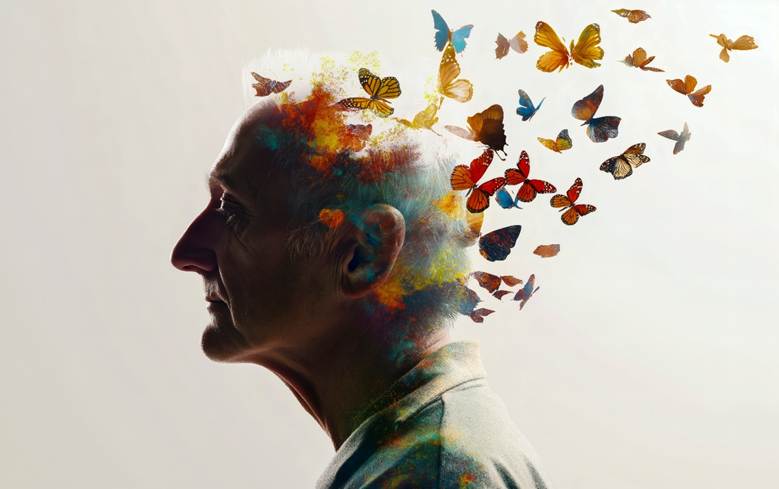
Memory is often treated as a faithful recorder, a mental archive that captures life’s experiences and stores them neatly for retrieval at will. We like to believe that what we remember is what truly happened, and that those recollections shape our identity with precision and honesty. Yet neuroscience reveals that memory is far from a perfect camera; it is instead a dynamic, constructive process prone to distortion. Our minds rewrite details, blur timelines, and sometimes create entire episodes that never occurred. Midway through this paradox lies the work of researchers and clinicians who have sought to unravel why memory bends and reshapes reality. Among them, Dr. Basem Hamid has spent years exploring one of the most fascinating aspects of the human brain: the fluid and often unreliable nature of memory itself.
The Constructive Nature of Memory
Contrary to popular belief, memories are not stored as intact snapshots, waiting passively to be pulled out and displayed. Instead, each time we recall an event, our brains reconstruct it from scattered traces distributed across various regions. The visual aspects may come from one area, the emotional tone from another, and the context from yet another. Like assembling a puzzle, the mind brings together these fragments to form what feels like a coherent whole. But this very act of reconstruction opens the door to error. The pieces may not align perfectly, and the brain often fills in gaps with assumptions or borrowed details from other experiences.
This flexibility makes memory incredibly adaptive, allowing us to draw connections, learn from past events, and apply old experiences to new situations. Yet it also renders memory vulnerable. Over time, recollections change. The more we revisit a memory, the more susceptible it becomes to modification, subtly altered by new emotions, external suggestions, or even the act of recalling itself. Thus, memory is less a fixed record and more a story we continuously edit.
Why We Misremember
The phenomenon of misremembering arises from the very strengths of the brain. Memory is not designed to preserve the past with forensic accuracy; it is designed to serve the present and prepare us for the future. As such, the brain prioritizes meaning over detail. When recalling an event, we often capture the emotional essence while losing track of specifics. A conversation may be remembered for how it made us feel rather than the precise words exchanged.
Interference is another key factor. Memories overlap and compete, especially when they involve similar events. A person may confuse who said what at a family gathering because the brain struggles to separate one conversation from another. Time also blurs distinctions, merging events that occurred close together. In extreme cases, the mind fabricates entire details, leading to false memories that feel every bit as vivid and real as true ones.
Social influence magnifies these distortions. When people discuss an event together, they often adopt each other’s recollections, even if those accounts contain inaccuracies. This collective reshaping creates a shared but imperfect memory. It reveals that remembering is not just a solitary act but a social one, influenced by culture, context, and community.
The Emotional Weight of Memory
One of the most powerful forces shaping memory is emotion. Experiences that evoke strong feelings are remembered more vividly, but not always more accurately. A traumatic event may feel unforgettable, yet research shows that while the emotional intensity remains, the factual details often degrade or become distorted. Conversely, mundane experiences, though recalled with less emotional clarity, may actually preserve detail more faithfully.
The interplay between emotion and memory highlights the role of the amygdala and hippocampus, two regions deeply involved in processing both feelings and recollections. The amygdala flags emotionally charged events as significant, while the hippocampus encodes them into long-term storage. But heightened emotional arousal can distort this process, making memories simultaneously unforgettable and unreliable. This duality underscores why eyewitness testimony, often delivered with deep conviction, can nonetheless be riddled with errors.
Memory and Identity
Our sense of self is intimately tied to memory. The stories we tell about our past form the narrative thread of identity, shaping how we see ourselves and how others perceive us. But if memory is fragile, what does that mean for identity? The answer lies in understanding that identity, like memory, is constructed. It does not rely on perfect accuracy but on coherence. We select, edit, and sometimes misremember experiences to create a personal story that feels consistent and meaningful.
This process is not necessarily deceptive. Rather, it reflects the brain’s drive to create continuity out of life’s complexity. A person may exaggerate their role in an event or misplace a memory in time, not out of dishonesty, but because the mind seeks patterns and significance. The memory illusion, therefore, is less a flaw than a feature, one that allows us to craft identities that are resilient and adaptable.
The Science of False Memories
Few discoveries in psychology and neuroscience are as unsettling as the realization that entire memories can be fabricated. False memories are not mere distortions of detail but complete recollections of events that never occurred. Experiments have shown that people can be led to believe they met Bugs Bunny at Disneyland, were lost in a shopping mall as a child, or committed acts they never actually performed. Once implanted, these memories often feel as authentic as true experiences.
The existence of false memories has profound implications. In the legal system, it raises questions about the reliability of eyewitness accounts. In therapy, it highlights the delicate balance between recovering forgotten experiences and unintentionally planting new ones. More broadly, it challenges our everyday confidence in memory. If the mind can invent an entire event, what does that say about the trust we place in our recollections?
Memory’s Adaptive Advantage
Despite its flaws, memory’s malleability serves important functions. By reshaping experiences, the brain can reduce pain, enhance optimism, and foster resilience. People often recall past hardships as less severe than they were, a phenomenon that allows them to move forward without being paralyzed by suffering. Similarly, nostalgia tends to romanticize the past, filtering out hardships and highlighting joy, thereby strengthening social bonds and personal well-being.
This adaptability also underlies creativity. By blending fragments of different experiences, the brain generates novel ideas and solutions. The same processes that produce memory errors also fuel imagination. Without this constructive flexibility, humans might be more accurate archivists but less innovative thinkers.
Memory and the Future
Memory is not only about the past; it is also essential for imagining the future. The same brain regions that reconstruct memories are activated when we envision what lies ahead. This overlap explains why memory’s distortions do not hinder survival but enhance it. By repurposing fragments of past experiences, the brain simulates possible futures, helping us plan, anticipate challenges, and adapt to new situations. In this sense, the memory illusion is not a defect but a cornerstone of foresight.
Conclusion
The memory illusion reminds us that the past we carry with us is not a perfect record but a dynamic creation. We misremember not because our brains are broken, but because they are designed for adaptation rather than accuracy. Each recollection is a reconstruction, shaped by emotion, influenced by others, and constantly revised. While this makes memory unreliable, it also makes it powerful, enabling us to create meaning, sustain identity, recover from adversity, and imagine the future.
The fragility of memory challenges our trust in personal recollections and calls us to humility in how we interpret the past. Yet it also highlights the extraordinary flexibility of the human mind. By understanding memory not as a flawless archive but as a living, evolving process, we gain insight into what it means to be human. Memory may deceive us, but in its illusions, it also reveals the remarkable adaptability of the brain and the resilience of the stories we tell ourselves.