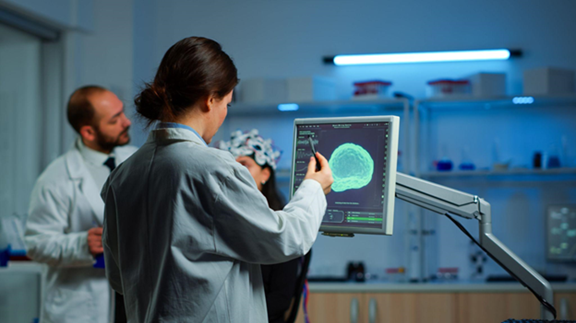
Pain medicine is undergoing a quiet but profound transformation as neuroscience and technology converge in new ways. At the center of this shift, Dr. Basem Hamid reflects a broader movement in the field, one that treats pain not as a singular symptom to suppress but as a complex neurological process that can be studied, measured, and strategically reshaped.
From Symptom Management to Neural Understanding
For decades, pain treatment relied heavily on pharmaceuticals, procedural interventions, and reactive care models. These methods worked in some cases, but they often only dealt with pain on the surface and didn’t take into account how the nervous system changes and adapts over time.
Advances in neuroscience now frame chronic pain as a condition rooted in neural plasticity, where persistent signaling alters pathways in the spinal cord and brain. This understanding has paved the way for treatments that target the source of pain instead of focusing on its downstream effects.
Key shifts redefining modern pain care include:
- Viewing pain as a dynamic neurological pattern rather than a static complaint
- Recognizing central sensitization as a driver of chronic pain
- Treating the nervous system as adaptable and trainable, not fixed
This conceptual evolution has created fertile ground for neurotechnology to play a central role.
Neuromodulation as a Core Therapeutic Tool
Neuromodulation represents one of the most impactful developments in contemporary pain medicine. By delivering controlled electrical stimulation to targeted nerves or spinal pathways, these technologies influence how pain signals are transmitted and interpreted.
Rather than overwhelming the system, neuromodulation seeks precision. Modern devices are designed to:
- Interrupt maladaptive pain signaling loops
- Reduce hypersensitivity within neural circuits
- Restore more normalized communication between the brain and body
What distinguishes current approaches from earlier iterations is refinement. Newer systems allow for tailored programming, adaptability over time, and greater patient comfort, moving neuromodulation from a last-resort option toward a strategic component of long-term care.
Closed-Loop Systems and Real-Time Responsiveness
One of the most promising frontiers in neurotechnology is the development of closed-loop neuromodulation. These systems do not simply deliver stimulation at preset levels; they continuously monitor neural activity and adjust output in response.
This evolution introduces several advantages:
- Reduced overstimulation and fatigue
- Improved alignment with real-world activity and movement
- Greater consistency in symptom control
By responding to the nervous system in real time, closed-loop platforms mirror how biological systems regulate themselves, creating a more natural therapeutic interaction.
Wearable Neurotech and Continuous Insight
Beyond implantable devices, wearable neurotechnology is reshaping how pain is monitored and understood. Sensors capable of tracking muscle tension, movement patterns, and physiological stress offer continuous information about how pain fluctuates throughout daily life.
These data streams support:
- Early identification of flare-up patterns
- More informed treatment adjustments
- Stronger alignment between clinical decisions and lived experience
Rather than relying solely on episodic reporting, clinicians can now observe pain as a continuous process, allowing for more responsive and personalized strategies.
The Role of Artificial Intelligence in Pain Analysis
Artificial intelligence is increasingly integrated into neurotech platforms, serving as an interpretive layer between raw data and clinical insight. Machine-learning models can detect subtle correlations across large datasets, revealing trends that might otherwise remain invisible.
In pain medicine, AI contributes by:
- Identifying predictive markers of worsening symptoms
- Optimizing stimulation parameters over time
- Supporting decision-making without replacing clinical judgment
This partnership between technology and expertise enhances precision while maintaining a human-centered approach to care.
Brain-Computer Interfaces and Emerging Possibilities
Brain-computer interfaces (BCIs) represent a more experimental yet compelling frontier. These systems translate neural signals into actionable inputs, enabling direct interaction between the brain and therapeutic devices.
Although still in early stages for pain applications, BCIs suggest future possibilities such as:
- Direct modulation of cortical regions involved in pain perception
- Adaptive therapies that respond to cognitive and emotional states
- Greater autonomy for patients in managing neural responses
The significance of BCIs lies not only in their technical capability but in how they reinforce the idea that pain is deeply intertwined with brain function.
Integrating Behavioral and Neurological Strategies
Neurotechnology does not operate in isolation. Many of the most effective applications integrate behavioral science, physical therapy, and cognitive training. Tools such as neurofeedback and immersive digital environments help patients retrain neural responses while reinforcing functional movement and emotional regulation.
This integrated model supports:
- Reduced fear-avoidance behaviors
- Improved neural resilience
- Stronger long-term outcomes
By addressing both signal transmission and perception, treatment becomes more comprehensive and sustainable.
Redefining the Future of Pain Treatment
The rise of neurotechnology marks a decisive shift in how pain is approached. Rather than relying on suppression or short-term relief, emerging tools focus on modulation, adaptation, and system-level understanding.
As these technologies continue to evolve, pain medicine is moving toward a future characterized by:
- Precision rather than generalization
- Collaboration between neuroscience and engineering
- Care models built around long-term neural health
This trajectory reflects a deeper commitment to understanding pain as a living process, one that can be guided, recalibrated, and reshaped through thoughtful application of technology and insight.